Thom Tillis
Senator for NC
State: NC
Primary Date: N/A (retiring)
Election Date: November 3, 2026 (open seat)
Goals:
1. Have him vote YES before midterms!
2. Get him to retire ASAP and get a temp placed in his stead in the next 30 days.
__________________________________________________________________________________________________
General Voting Records on key bills
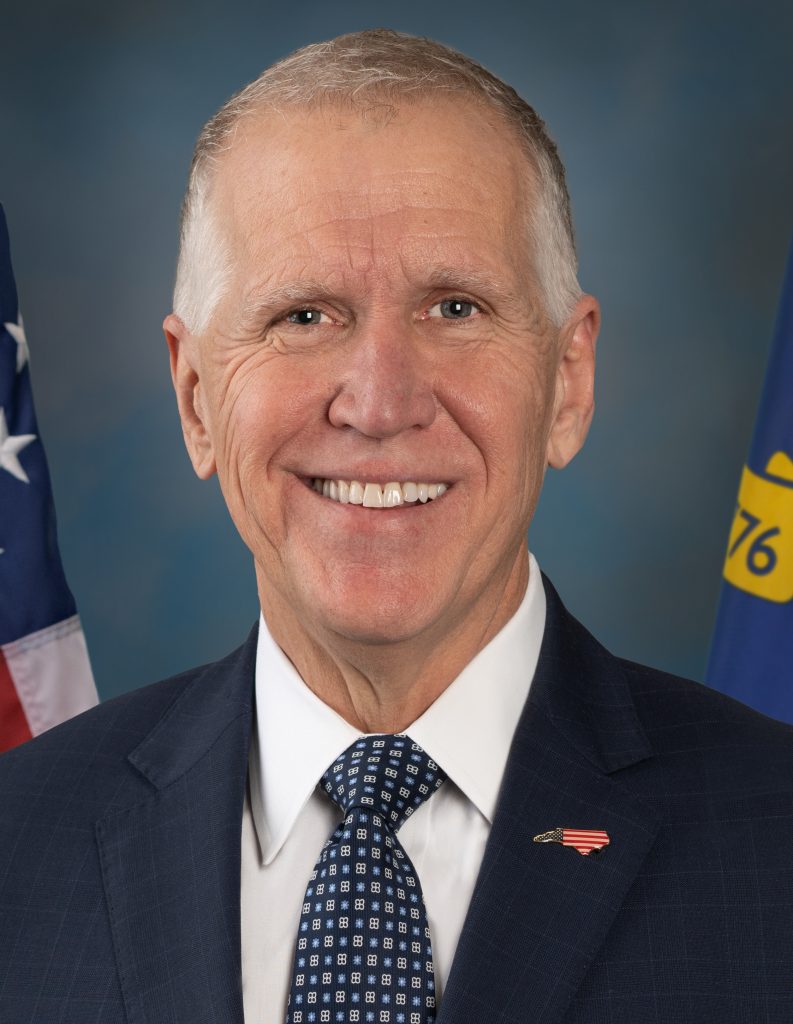
Thom Tillis:
**Thom Tillis is a classic example of a RINO (Republican In Name Only).**
- Heritage Action lifetime score: around 59%** (with recent session scores as low as 39%), placing him well below the conservative wing of the party.
- He repeatedly voted with Democrats to block the SAVE Act / SAVE America Act, joining Collins, Murkowski, and McConnell to kill key amendments in 2026.
- He co-sponsored an earlier version but later opposed Trump’s preferred version, calling aggressive efforts to pass it an “impossible task,” arguing it can’t be implemented in time for the midterms, and dismissing strategies like the talking filibuster as “goofy.”
- Long pattern of moderate/bipartisan behavior: frequent clashes with Trump and the MAGA base, willingness to block nominees or priorities, and prioritization of institutional caution over party loyalty.
- **Result:** A textbook establishment Republican who often frustrates conservatives — willing to wear the Republican label while regularly opposing the party’s strongest election-integrity and Trump-aligned priorities.
- (He is retiring and not seeking re-election; his term ends January 2027.)
The Save Act – statements
Public statements:
*Thom Tillis’ statements on why he voted “No” on the SAVE Act / SAVE America Act*
* Senator Thom Tillis has been relatively direct in explaining his opposition to advancing the bill in 2026. Here are his main public reasons: ### Key statements and positions:
1. **“It’s a math problem”** “We simply don’t have the votes, and the SAVE Act will not be implemented in time for this election. Anybody that knows anything about election law understands that.”
2. **Cannot be implemented in time** He has repeatedly argued that the bill is too expansive to put in place before the November 2026 midterms. “Does any rational person who’s ever had any experience with implementing election law really think that it’s possible to have all that in place in time for this election and not be disruptive?”
3. **Unfunded mandate** Tillis noted that the legislation provides “zero dollars for implementation,” calling it an unfunded mandate on the states.
4. **Strategic disagreement** He has said Republicans should focus on positive messaging about their results and the threat of “Democratic Socialists” rather than continuing to push a bill he believes undermines confidence in elections and distracts from winning in November. “Why are we doing more things to undermine our confidence in elections, rather than getting the strong message out that will win for Republicans this year?”
5. **Criticism of procedural strategies** He dismissed efforts such as the “talking filibuster” pushed by some colleagues as “silly,” “goofy,” and unproductive — comparing them to “a remake of a bad movie that just keeps on getting released.”
**Bottom line from Tillis:** He views the current push for the SAVE Act as both mathematically impossible (lack of votes) and practically unworkable on the short timeline before the midterms. He prefers shifting focus away from the bill.
Real Simple Truths:
Senator Tillis argues that the SAVE Act faces a “math problem” can’t be implemented in time for 2026, is an unfounded mandate, and distracts from better messaging.
“The American people strongly support proof-of-citizenship and voter ID requirements. Passing the SAVE Act now — even if full implementation takes longer than one election cycle — establishes the clear national standard that only citizens vote and that voters must show ID.
States have successfully implemented similar reforms before; with proper federal support and a realistic transition period, the practical hurdles can be solved.
Leaving the current system unchanged does more to undermine long-term confidence in elections than enacting popular, common-sense safeguards.
Focusing solely on short-term messaging while declining to advance the bill sends the opposite signal: that securing elections is too hard or not worth the effort.
Leadership means solving the problems, not declaring them impossible.”
Real Simple Truth Review and Recommendations:
Core Position:
He has made the consistent choice of politics over the People’s Will – Procedure over Common Sense!
– There is no room for negotiations with him, he hates Trump and a classic example of a RINO!
Proposed Paths vs. Concerns to get the Bill into Law:
1. Eliminate (“nuke”) the filibuster
How it works: Simple majority (51 votes including VP) changes Senate rules so bills pass with 51 votes.
Addresses Thune’s math concern?: Yes – removes the 60-vote barrier.
How it works: Simple majority (51 votes including VP) changes Senate rules so bills pass with 51 votes.
Addresses Thune’s math concern?: Yes – removes the 60-vote barrier.
2. Talking filibuster (Mike Lee approach)
How it works: Keep the bill on the floor indefinitely; force Democrats to hold the floor until they exhaust or concede.
Addresses Thune’s math concern?: Tries to wear down opposition without changing rules.
How it works: Keep the bill on the floor indefinitely; force Democrats to hold the floor until they exhaust or concede.
Addresses Thune’s math concern?: Tries to wear down opposition without changing rules.
3. Budget reconciliation
How it works: Package the bill (or key parts) as having a direct budgetary impact so it needs only 51 votes and cannot be filibustered.
Addresses Thune’s math concern?: Yes – bypasses the 60-vote threshold.
How it works: Package the bill (or key parts) as having a direct budgetary impact so it needs only 51 votes and cannot be filibustered.
Addresses Thune’s math concern?: Yes – bypasses the 60-vote threshold.
4. Attach to must-pass legislation (NDAA, FISA, appropriations, etc.)
How it works: Force a single up-or-down vote by linking it to funding or defense bills.
Addresses Thune’s math concern?: Creates political pressure but still requires 60 votes or risks killing the host bill.
Practical status: Tried multiple times in 2026; failed when four RINO Republican holdouts joined Democrats.
How it works: Force a single up-or-down vote by linking it to funding or defense bills.
Addresses Thune’s math concern?: Creates political pressure but still requires 60 votes or risks killing the host bill.
Practical status: Tried multiple times in 2026; failed when four RINO Republican holdouts joined Democrats.
Bottom line:
Thune and Friends treats the current vote counts as fixed facts. The alternative paths try to circumvent those exact obstacles. So far, repeated floor failures and parliamentarian rulings have aligned more closely with Thune’s description of the “facts on the ground.”
Thune and Friends treats the current vote counts as fixed facts. The alternative paths try to circumvent those exact obstacles. So far, repeated floor failures and parliamentarian rulings have aligned more closely with Thune’s description of the “facts on the ground.”
Contact Him
Here is some ways to contact him
Take Action – Save Act
Phone Number DC: (202) 224-6342
Local Number: (704) 509-9087